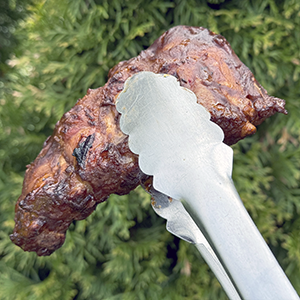
Indium (In) — Post-transition metal. Atomic number 49.
Very soft silvery metal
- Atomic number: 49
- Symbol: In
- Atomic mass: 114.82 u
- Category: Post-transition metal
- State: Solid
- Melting point: 156.55 °C / 429.7 K
- Boiling point: 2071.85 °C / 2345 K
- Density: 7.31 g/cm³ (20°C)
- Electron configuration: [Kr] 4d10 5s2 5p1
- Oxidation states: +1, +3
- Electronegativity: 1.78
- Discovered by: Ferdinand Reich and Hieronymous Richter (1863)
Common uses: Touchscreens, Semiconductors, Low-melting alloys
Biological role: No biological role.
Frequently Asked Questions about Indium
What is the atomic number of indium?
Indium has an atomic number of 49, meaning each atom contains 49 protons in its nucleus.
What is the atomic mass of indium?
The standard atomic weight of indium is 114.82 u (unified atomic mass units).
What category does indium belong to?
Indium is classified as a post-transition metal.
What is the state of indium at room temperature?
Indium is a solid at 20 °C (68 °F).
What is the melting point of indium?
The melting point of indium is 156.55 °C / 429.7 K.
What is the boiling point of indium?
The boiling point of indium is 2071.85 °C / 2345 K.
What is the density of indium?
The density of indium is 7.31 g/cm³ (20°C).
What is the electronegativity of indium?
Indium has a Pauling electronegativity of 1.78.
What is the electron configuration of indium?
The electron configuration of indium is [Kr] 4d10 5s2 5p1.
What are the common oxidation states of indium?
Indium commonly exhibits the following oxidation states: +1, +3.
When was indium discovered?
Indium was discovered in 1863 by Ferdinand Reich and Hieronymous Richter.
Is indium radioactive?
Indium is a stable element with no naturally occurring radioactive isotopes.
What is the biological role of indium?
No biological role.
What are the common uses of indium?
Indium is used for: Touchscreens; Semiconductors; Low-melting alloys.